NorsePlay Reviews: The Boneless Mercies. 📘
Let's start with The Boneless Mercies (2018 CE), and far more importantly, let's lead with why using a band of traveling female assisted honour-suicide deathbringers who want to become glorious heroes is a very important NorsePlay, after which we'll get into a standard critical teardown of the novel.
With the identification of the Birka Viking Warrior's high-prestige grave (Bj 581) as a woman in 2017 CE, and the subsequent re-examination of other graves previously thought to be men also getting re-gendered as result, we then become curious as to why there's a lack of Eddic Goddess myths and Saga Literature that feature bold female protagonists to reflect that (†). Sure, we get wintery huntress Skaði and awesome tomboy adventuress Hervǫr Angantýrsdottir, but that's about it beyond mentions of Valkyries harvesting the dead and Hel keeping hers. That leaves a vacuum that was probably filled with stories we no longer have (and I would hope will one day be re-discovered, maybe a long lost Kvennasagabók in a skáldkona's chamber grave) but until that happens we only have the funerary archaeology without any soaring narratives to support that. And that's why there needs to be more books like The Boneless Mercies to fill that in, to give us those missing stories that were but are no more. That's so bloody important to both how we think of the past and to carry that forward into our own heroic potential as people in the present.
So maybe my excitement level in finally reading this got me hopefully dialed up, but let me now more realistically dial it down as a novel for you.
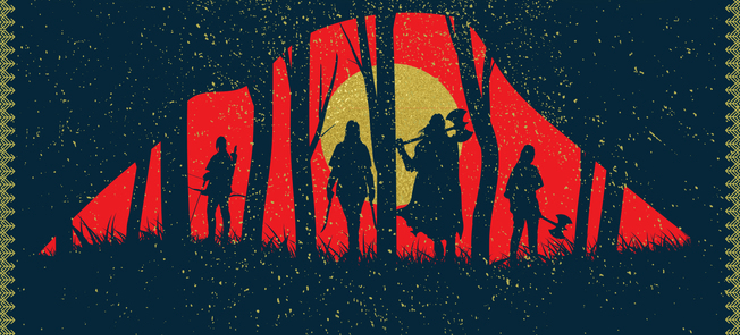
Author April Genevieve Tucholke takes the broader medieval Norse period and decides to re-title everything: Norse becomes Vorse, Iberian becomes Iber, Rangers become Quicks, Freyja just becomes Valkree as a catch-all Goddess' functional name, Forseti becoming Forset, Odin becomes Obin, Valhalla becomes Holholla, and so on.
In using this thinly veiled re-naming structure, I suspect Tucholke feels she frees up her hands for authorial liberties and can then do as she pleases for a young adult market, though this book could just as easily been sold as a regular fantasy novel. Yet in trying to re-title all the things, it's still tethered to what that all originally is, only giving itself a slight shift to allow for a bit of D&D specialty class adjustment among labeled occupational factions, and what we're basically getting at its plot's core is a re-telling of Beowulf without the time ellipse to the dragon. There's a three act structure, and while the first two acts aren't really Beowulf-lifted, they do become a groundwork for just being on the road to the monster-plagued Jarl's northern hall.
Given NorsePlay's other time intensive projects right now I went with the unabridged audiobook (though I do have a hardback copy), which generates this specific criticism: Reader Saskia Maarleveld's comes off as a debbie downer. I get that this is a world fraught by doom, hostile witches, dire wolves, and actual monsters, but even when the characters assert themselves, or have what might be considered a happy interlude, it still gets delivered with a lack of confidence or joy. By some contrast Maarleveld's "Vorse" jarl's accent work when the setting moves north is actually pretty cool.
There's a repetitive restating of who the characters are, and what the situation is, to the point of where the reader must be saying to themselves, "Okay, I know, I get it". And the story is in a close first-person, so having an identity/plot loop so often given by Frey (the female Boneless Mercy, not the male Norse God) who narrates is a strangely internal dead horse device that happens too often.

Socially the four main characters seem to be living in a permissive hook-up culture, but with meaningful connections beneath the casualness of it to make it feel okay for both the characters and the reader. You also get the impression they're all rather attractive and so not subject to much bonelessness when they want it. Still, it comes off as openly modern and not medieval-based, but there's a provocative interest stirred in reading who gets intimate with who in the group's interactions with others.
So back to my first point of why these types of female hero stories are needed: Is The Boneless Mercies a raging firebrand that will cast light into the historical vacuum? It was named a "best book" of 2018 by Publishers Weekly, and got a lot of other critical praise when it came out. Yet I find it's a bit less than the sum of its parts, a while not a firebrand (and perhaps that's hoping for too much from it in this context of a much more important purpose) it still can be considered a commercially successful lit match that just might kindle others to contribute to a larger, much warmer, narratively NorsePlay'd complex heroine need-fire, and for that I hope we'll later look back at Tucholke's The Boneless Mercies with influential thanks.
[† which, if we think about, is probably in part why Vikings' Lagertha gets so inordinately (but necessarily given the need) revered as a lightning rod for this absence.]Guillermo Maytorena IV knew there was something special in the Norse Lore when he picked up a copy of the d'Aulaires' Norse Gods and Giants at age seven. Since then he's been fascinated by the truthful potency of Norse Mythology, passionately read & studied, embraced Ásatrú, launched the Map of Midgard project, and spearheaded the neologism/brand NorsePlay. If you have employment/opportunities in investigative mythology, field research, or product development to offer, do contact him.


Comments
Post a Comment