Posts

Showing posts with the label Runic Studies

the origin of the Runes?

Image
One theory has it that the ancient Germanics based their runic writing from the Etruscans. I'm not definitively weighing in on this, but I happened upon a photo of the Pyrgi Gold Tablets where the right two are in Etruscan characters bearing some resemblance to the runes : From 500 BCE, and it wouldn't be so hard to conceive of the characters evolving or changing into Elder Futhark as time went forward. Here's a transcription for more clarity of the letter forms: Sinistrodextral and boustrophedon are present in surviving runic examples, so the left-to-right in the Etruscan above allows for runes later being pretty fast & loose with whichever direction they were written. The Ansuz ( ), Isa (ᛁ), Sowilo ( ), and Laguz ( )-like characters in mirror/reverse seem pretty dead on. These tablets are also a dedication to the Mesopotamian goddess Ishtar, and that could also be seen as a sacred throughline with uses of the runes on amulets, wood staves intended for magic, and runes...
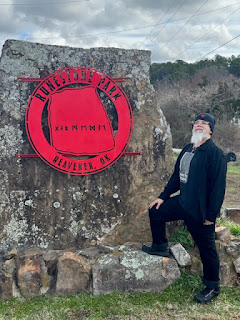
NorsePlay Investigates: The Heavener Runestone.

Image
I know what you're thinking: a runestone in eastern Oklahoma?!? Yet if the Norse traveled east to the Black Sea, maybe even further into Asia via the spice roads, why not the same reach past Leif's Camp in Newfoundland and extending into America via coastal circumnavigation, rivers, and portages? [detail from park sign with proposed river route & location.] So I, as a proactive Investigative Norse Mythologist , used this legendary stickpin from my Map Of Midgard Project data to go take a firsthand look at the contested Heavener Runestone. [runes with me for scale.] Objective Observations: Out in small vale of the wilderlands of Heavener stands a 9' x 9' x 2' slab of sandstone, like a huge billboard facing west. From the collapsed layers of rock behind it, it seems to have detached and neatly planted itself upright in the earth. Whether that's incidental, or it was raised, or detached by force, and even possibly carved first then erected, one can't say,...